


When I eat at a Chinese restaurant and get the fortune cookie, I quietly hope it’ll directly address something going on in my life. Like Fox Mulder, I want to believe. My late mother (a great lady) taught me the “flip your Bible pages and point to a verse” method of learning what to read. (One time, when I was quite young, I was sure the verse she pointed to was to assuage my guilt for not-so-secretly using my pocket knife to cut window screens at the house.)
I love insider information.
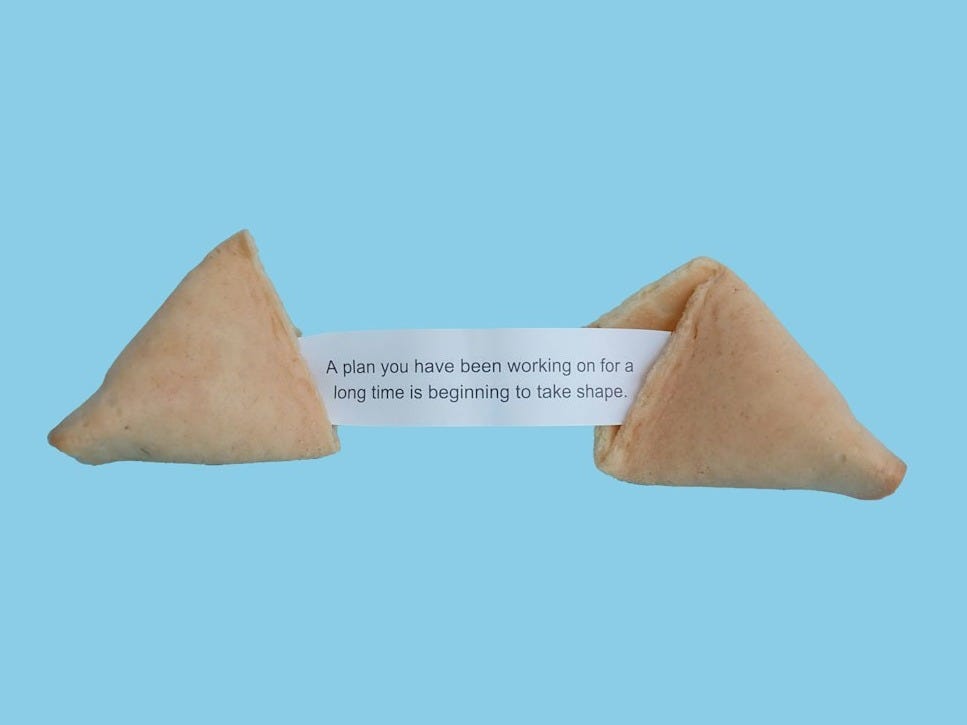
I think the desire to feel unique is why so many of us want special messages—from God, from fortune cookies, or from strangers. It adds mystique. And if you can say, “God told me . . .” then you have a whole new type of gravitas.
“God told me I needed to break up with my boyfriend.”
“God told me it was time to change jobs.”
“God told me to talk to that stranger.”
I get the feeling and the desire to add a special authority to life decisions—even mundane ones. Such a stamp feels like unlocking a new level of maturity. There’s such amazement in feeling like you got a unique message.

I remember being in college and meeting a guy whose name I think was Daniel (not the Bible one). He told me about his dreams. If I recall, he told me about a time he heard a song in heaven and it was told to him in that dream that it was the best worship song to ever be written. (He did not mention whether it was Elevation Worship.)
I remember how I responded: This is amazing. What might he know about me?
So I asked Daniel what message he got for me. At that time he didn’t have one (I appreciated the honesty). However, a while later he came by with a piece of paper and some thoughts written down, which he read to me. I wish I still had them—they were kind words, and maybe even accurate.
But that was in college—almost 25 years ago. My approach has changed since then. I don’t think it has mellowed. I think it has deepened.
I’ve found saying “God told me . . . ” is an unnecessary statement. When used, it can make maturity out to be something it’s not—receiving and delivering special messages. It can also lose out on what maturity is—growing up in such a way that my daily actions reflect Jesus.
In fact, I think it takes more faith to simply act on what gets borne out over time reading Scripture, praying, and talking with those in my life who love me.
What do I mean? We walk by faith and not by sight (2 Cor 5:7). If I have to “God told me” my way into things, I’m adding sight where there should likely be none.
First, I have so much at my disposal already—an entire Bible to read, know, study, meditate on, and pray over. If it says, “Love your neighbor as yourself,” then I don’t need to tell you that “God told me to go talk to my neighbor last Tuesday.” If it says, “Love your wife as Christ loved the church,” I don’t need to say, “God told me I needed to stop playing video games so I can be more present with my wife.” I just apply what I’ve read—it’s already speaking.
Second, I have prayer. This is, for me, where the magic happens (“magic” is the wrong word to use here, but go with me). The dynamic of consistently praying for all kinds of things (from the hope of the eventual mortgage being paid off to the transformation of friends and family to the plans we have for Summer 2027) grows my faith. Prayer humbles me, creates watchfulness, and puts me in a position where I am both sifting and being sifted. When it is time to move, you move.
Third, I have my community. When declaring “God told me,” I can become unchallengeable—a law onto myself. What if we went to one another and said, “This is what I believe is important for me to handle next in life. What do you think?” Or, “I believe God wants me to ________. What am I missing?” That simple change puts the accountability where it belongs: with my God-given church family or community that loves me and wants the best for me.
But that isn’t to say I think one’s relationship with God should be static, robotic, or boring. For my readers who walk by faith and not sight, I hope that your relationship with God is thriving. And that comes through daily intimacy.
A time I screwed this up . . .

If you were to ask me what my wife, Courtney, liked, I would not need to tell you, “Well, she told me she liked . . . .” I would just say, “She likes cash.” She’d rather have $20 in her wallet than $100 more in her bank account. More importantly, I also know she likes to bake—especially for others. She likes to find ways to serve her friends and, when she can, watch their kids. She likes reading. She likes the Cabo Salad at Gringo’s. So do I. (It’s good.)
I was recently in the dining car on a train ride. I sent Courtney a photo of my booth. Having just spent five days in Philadelphia, two days at home, and then three days in Louisiana, my diet was a mess.
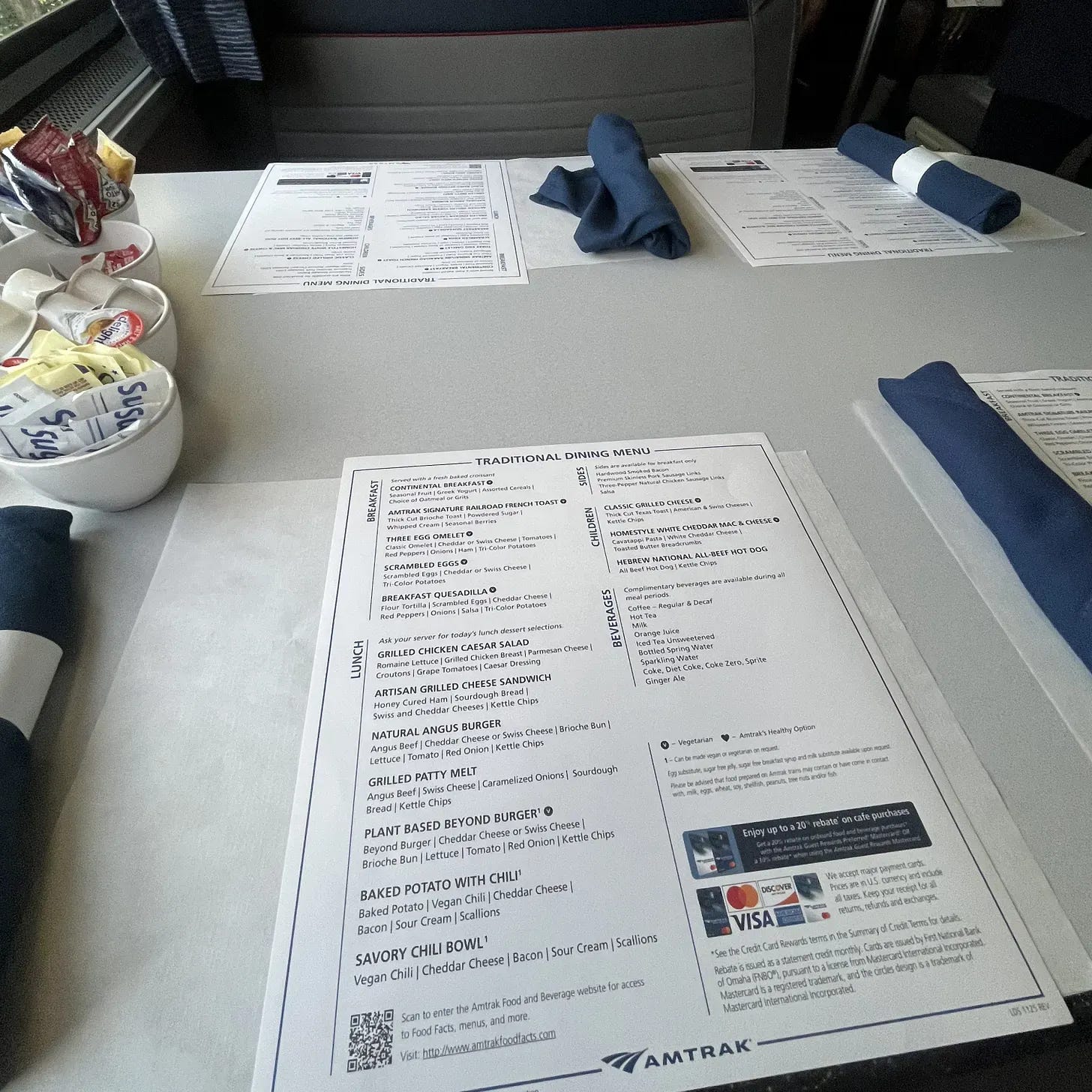
“My guess is you got the salad.”
I didn’t ask her to guess anything, but she likes to zoom in on photos people send her and make comments. Courtney and I talk daily. We pray daily. She knew I’d been feeling off and had been eating too much. So she guessed my order for me without ever asking.
That’s the thing about intimacy: as it grows, declarations diminish.
You walk, you talk, you live, and—over time—you learn at a much deeper level what the other person cares about. You become that person’s advocate without realizing it. In a sense, when you enjoy all that relationship has for you, you don’t need as many words.
For the Christian today, our old roads of Scripture and prayer are well-worn and provide a powerful dynamic. You don’t need to declare. You need to abide.
What’s your next step?
Thanks for reading. One of the best ways you can support the work is by engaging. Do one: hit the like button, comment, or share with a friend. It’s a simple way to grow the community.
Yes, I agree…🥰